

Some websites can subtly attract you. Not because they’re flashy or promise luxury, but just because they’re easy – plain clothes, reasonable prices, and styles anyone could see themselves wearing day-to-day.
Lilywish.com fits right into that mould.
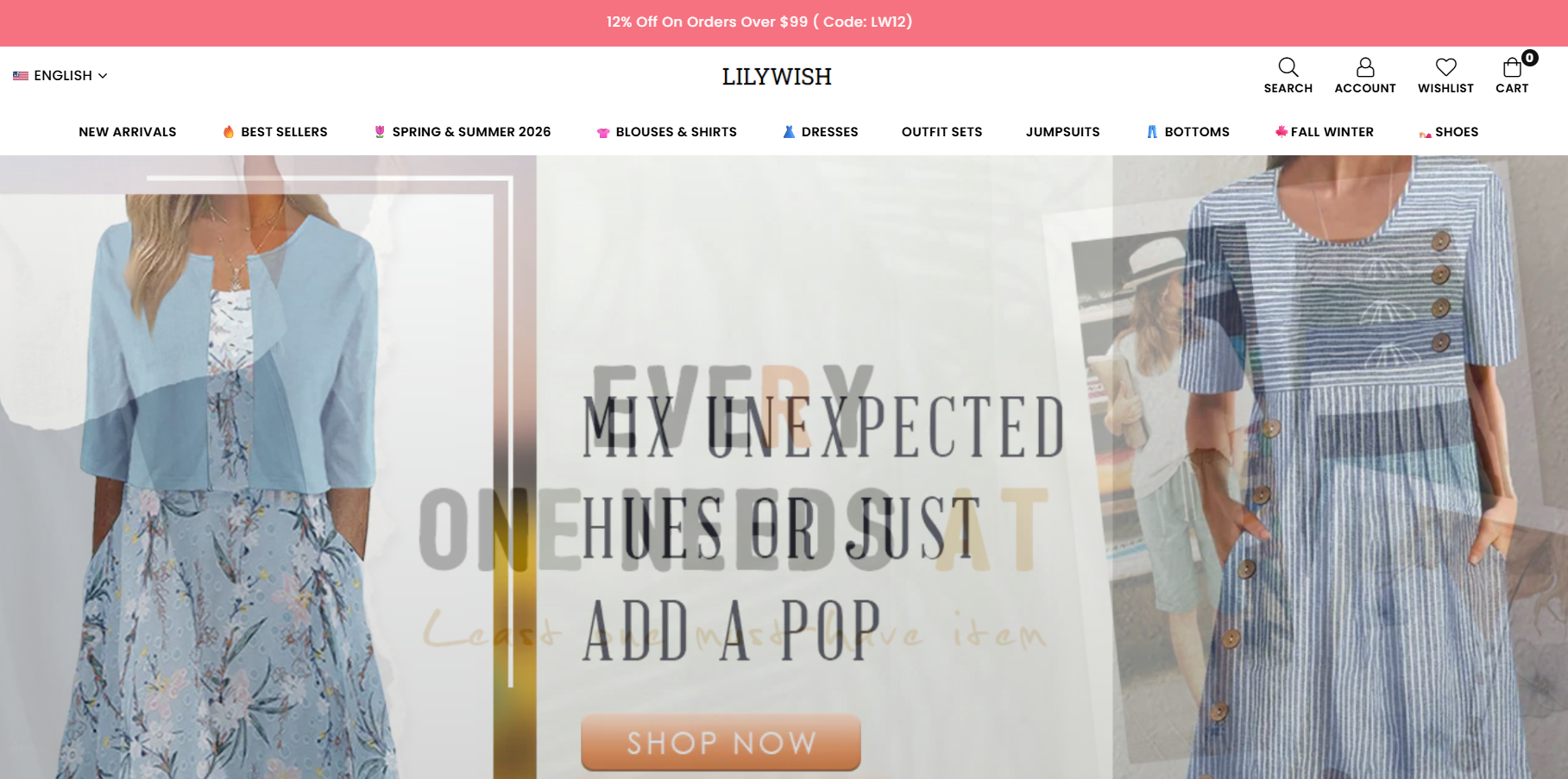
You hop on the site, and it immediately gives a relaxed vibe. Cotton tops, loose dresses, comfy pants. It’s not trying hard to impress. It’s just selling easy, everyday clothing.
But here’s where things get interesting: when a site keeps it this simple and affordable, the real question pops up – are you actually getting a good deal, or is it just dressed up to look that way?
Instead of making snap judgments, let’s dig into the details: products, pricing, photos, the policies, and maybe most importantly, what other people have said about it online.
First Impressions – Casual, Soft, Designed to Shop Fast
Lilywish.com isn’t pretending to be anything fancy. It’s got bright photos, big discounts plastered everywhere, and navigation that’s dead simple. There’s no talk about brand history, no luxury vibe, not even a catchy story about where the clothes come from.
Basically, it seems to say, “Look, here’s some comfy stuff for good prices. Pick what you like.”
And honestly, that kind of straightforwardness is pretty effective. Makes people feel relaxed and keeps things moving.
But there’s a catch: the layout is the standard template you see all over the place. If you’ve reviewed a few clothing sites, you’ll spot it right away. Stores using this approach usually care more about selling lots of things than building a real brand.
Products – Comfortable, Totally Wearable… But Nothing New
Lilywish focuses on women’s casual clothes: cotton pants, loose tops, summer dresses, printed blouses, shorts — all that.
Prices run about $23–$28 for pants, $20–$25 for blouses, and dresses somewhere between $30–$40. At first glance, you might think, “Hey, not bad.”
The style is practical: loose fits, breathable fabrics, meant for everyday life.
But the big thing is, none of it’s unique. You see these designs everywhere, over and over. There’s no signature look. Which really makes it feel like Lilywish just buys from generic suppliers instead of designing their own stuff.
Pricing – Looks Cheap, Always On Sale
Prices are a major selling point. Almost everything shows a fake “original” price slashed by 40–60%. You get $50 items marked down to $23, $75 dresses for $32.
But if everything’s on sale all the time, is anything actually on sale? It’s that classic trick to make you feel like you need to buy now.
Sure, the prices are low, but that doesn’t guarantee the stuff is any good.
Product Images – Clean, But Not Unique
The photos are decent: clear, well-lit, and models wearing the clothes. But browse around a bit, and you’ll notice the images are generic. They’re not made for a particular brand. More like supplier catalogue shots reused across different sites.
That matters – because if the pictures aren’t original, you run the risk of the actual product not matching expectations.
When you click through Lilywish’s product pages, you notice something pretty fast: the descriptions are very minimal. They convince you with a vibe, not so much the actual details. Most of the blurbs sound the same – stuff like “comfortable fit,” “casual style,” “perfect for daily wear,” “lightweight and breathable.” Sure, that’s fine… but only up to a point.
What’s missing is actual information. There’s almost zero technical stuff. You rarely see:
- Is the fabric pure cotton, polyester, or some random blend?
- How thick is it? What does it feel like in your hands?
- Does the stitching hold up, or is it gonna unravel in a few washes?
- Will the material shrink or stretch after laundry day?
- Does it keep its shape, or does it get tired and saggy?
None of that is there. So you’re left looking at a nice photo, thinking, “Looks comfy… but is it the real deal, or just dressed up for the camera?”
And then there’s sizing. You get a basic chart, maybe, but very little on how the clothes actually fit. Like: Are you supposed to size up because it runs small? Is it meant to be baggy? Is the fabric stiff, or does it have some give? It’s all left vague, so buying feels like leaping.
You know what it looks like. But you don’t really know what you’re buying.
Now let’s talk about the About Us page:
Yeah, it exists – which is a decent sign. But when you read it, it’s so generic. The usual stuff: “We provide stylish clothing,” “We focus on customer satisfaction,” “We offer comfortable fashion.” It sounds like any random store. What’s missing? The stuff that makes you trust a brand: Who started it? Is it a solo project or some huge company? Where’s the business actually based? How long has it been around? There’s no story, no background, no real identity. And honestly, that matters. Real brands want people to know who’s behind the scenes and what they stand for. Here, it feels like the page exists just because someone said it should, not to actually connect.
Contact & Support:
Say you’ve got an issue – wrong size, delayed package, want a refund—you’ll need help. But on Lilywish, support is just an email address. No phone number, no live chat, no WhatsApp, no business address. So everything hinges on how the company handles emails. Sometimes, that’s okay – quick replies and proper help. But just as often, responses drag on, come off as copy-paste, and you end up stuck in an email loop. When you’re dealing with money or returns, that matters a lot. Having only email means you’ve got way less control as a customer.
Shipping & Delivery:
Shipping & Delivery looks straightforward at first. But poke around, and you realise most orders ship internationally. That’s probably why delivery takes anywhere from one to three weeks, sometimes more, depending on where you live. Tracking isn’t always reliable, and packages bounce through a bunch of transit points. The site doesn’t really say where the stuff ships from, so people might think it’s local when it’s actually global. That gap between expectation and reality leads to disappointment.
Returns & Refunds Policy:
Sure, there’s a policy. On paper, it seems reasonable. In practice, it can get tricky. Usually, you have to start the process quickly, the item must be in perfect shape, and you have to cover return shipping. That last part’s a killer – international return shipping can cost almost as much as the product itself. Then you sit and wait for inspection, approval, and processing. So, yeah, refunds are technically offered, but the hassle makes a lot of people just keep the item or settle for an exchange.
Put it all together: product descriptions, About Us, support, shipping, returns – they all exist, but none go deep. Descriptions help you buy. About Us exists just to exist, support is one-track, and policies aren’t flexible. That’s why people hesitate, honestly. A reliable brand goes that extra mile to clear up doubts. Here, the doubts stick around.
What Others Say — The Real Test
Outside sources give Lilywish a low trust score, which should make you pause. Technical safety checks don’t show malware, but that doesn’t mean the store is reliable.
There aren’t many real reviews, and zero presence on trusted platforms. No big batch of verified customer feedback.
Complaints from similar stores paint a pattern: items go “out of stock” after buying, refund delays, and endless replacement offers instead of refunds. This is typical for supplier-based stores.
Bringing It All Together
What works:
– Simple site, easy to use
– Cheap pricing
– Comfortable everyday clothes
What’s worrying:
– Low trust score from outside sources
– Generic, supplier-sourced products
– Barebones product info
– Weak brand identity
– No verified reviews
– Potential headaches with delivery and returns
Should You Trust Lilywish.com?
Lilywish.com isn’t a giant red-flag scam. It doesn’t promise miracle deals or fake products. But it doesn’t inspire much trust, either. It sits in a “be careful” category.
Maybe fine for a tiny order, but there’s a risk.
Final Rating
Trust: 2/5
Transparency: 2/5
Product Clarity: 2/5
Customer Support: 2/5
Overall Risk: Moderate
Practical Advice
If you’re thinking of buying:
– Start small
– Don’t expect top quality
– Wait for shipping
– Stick to secure payment
And whatever you do, don’t judge the site just by its looks. Because in online shopping, simplicity can hide a lot more underneath.